


Most irrigation failures aren’t caused by “bad parts” — they’re caused by poor irrigation system design.
If your lawn is patchy, pressure is weak, or you constantly adjust runtimes with no real improvement, the issue is usually layout and zoning — not the controller.
This guide explains the fundamentals of proper sprinkler irrigation system design, so you understand what works — and why professional design prevents expensive rework.
Everflow can handle design, installation, and validation properly from the start.

Design basics that prevent expensive rework
A correct design ensures:
• Even water coverage across turf
• Separate zones for different watering needs
• Components matched to available pressure and flow
• Pipe sizing that maintains performance
• Accessible valves and logical layout
Skipping design leads to overwatering some areas to compensate for dry patches elsewhere — which increases water use and stress on the system.
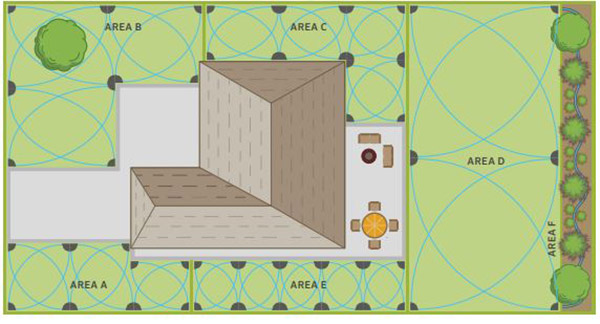
Zones explained (the part most systems get wrong)
Zones should be separated based on:
• Sun exposure (full sun vs shade)
• Plant type (lawn vs garden beds)
• Soil type (clay vs sandy)
• Slope (runoff risk areas)
• Turf establishment vs mature turf
Combining different needs into one zone forces compromise.
Proper zoning is the foundation of efficient sprinkler irrigation system design.
Pressure + flow (why coverage fails)
Coverage issues almost always come back to pressure and flow.
Common design mistakes:
• Too many sprinkler heads on one zone
• Pipe too small for distance
• Incorrect nozzle selection
• Not measuring pressure before installing
If pressure drops across the zone, sprinklers won’t throw properly — leaving dry strips.
Everflow measures pressure and available flow before selecting heads or finalising layout.

Head spacing & head-to-head coverage
The golden rule for lawn sprinkler design:
Spray from one head should reach the next head.
This is called head-to-head coverage, and it prevents:
• Dry strips between heads
• Compensating with excessive runtime
• Uneven growth patterns
Without correct spacing, no controller setting will fix the issue.

Drip zones vs spray zones (mixing correctly)
Spray and drip irrigation operate differently. They should not share a valve.
• Spray zones require specific pressure and runtime
• Drip zones require filtration and pressure regulation
• Run durations are usually different
Mixing them creates inconsistent watering and system strain.
Professional irrigation system design separates them properly from the beginning.

Everflow design method
Everflow follows a structured approach:
- Measure pressure and flow
- Plan zones based on site conditions
- Match products to hydraulic capacity
- Install cleanly
- Validate coverage and performance
Design-first prevents redesign costs later.
If you want sprinkler irrigation system design that performs long-term, Everflow can handle the planning and installation. Book a design assessment in Brisbane today.

FAQs
Do I really need professional irrigation system design?
If you want even coverage and efficient water use, yes. Poor layout causes most long-term issues.
How many zones should a property have?
Enough to separate lawn from gardens and account for sun exposure differences.
Can Everflow redesign an existing sprinkler system?
Yes. Many systems can be improved without full replacement.